
Introduction
Open AI, a leading Artificial Intelligence research organization, has recently announced the release of its latest breakthrough, the Open AI GPT-4 [3]. This model is a large multimodal model capable of accepting both image and text inputs and emitting text outputs. The model has exhibited human-level performance on various professional and academic benchmarks, making it a significant milestone in the field of Artificial Intelligence.
Understanding Open AI GPT-4
The Open AI GPT-4 is an advanced artificial intelligence model that can accept both image and text inputs, making it a unique model. This model is an extension of the previous GPT-3 model and is expected to perform better than its predecessor in various tasks. Open AI GPT-4 exhibits human-level performance on various professional and academic benchmarks, making it a significant advancement in the field of Artificial Intelligence.
Applications of Open AI GPT-4
The Open AI GPT-4 has various applications across different industries. One of the primary applications of GPT-4 is in Writing and Translation Assistance. The model can help writers in generating content and even translate content from one language to another. Another significant application of GPT-4 is in Virtual Assistance and Chatbots. GPT-4 can assist in customer service and other interactions. Finally, GPT-4 has potential applications in education and training. The model can help in creating training materials, quizzes, and other educational content.
Benefits and Limitations of Open AI GPT-4
The benefits of GPT-4 are significant and can impact different industries positively. The model can improve the efficiency and accuracy of writing, translation, and virtual assistance [2]. However, the limitations of GPT-4 cannot be ignored. The model is still inferior to humans in many real-world scenarios, and there is a risk of it being used for unethical purposes.
Powerful ability
- Creativity GPT-4 is more creative and collaborative than ever before. It can generate, edit, and iterate with users on creative and technical writing tasks, such as composing songs, writing screenplays, or learning a user’s writing style.
- Longer context GPT-4 is capable of handling over 25,000 words of text, allowing for use cases like long-form content creation, extended conversations, and document search and analysis.
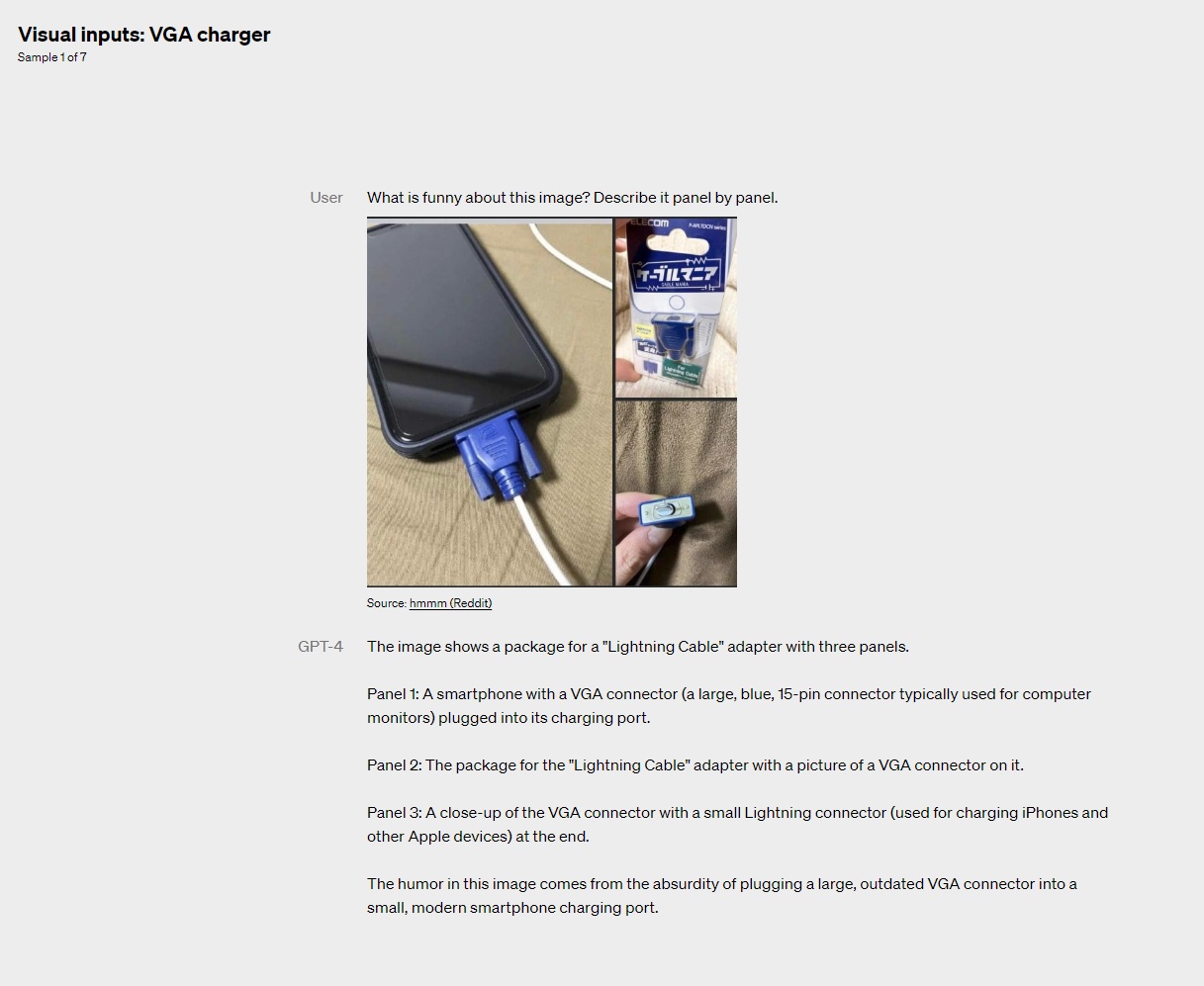
- Visual input GPT-4 can accept images as inputs and generate captions, classifications, and analyses.
Future of Open AI GPT-4
The future of Open AI GPT-4 looks promising, with possible advancements and developments in the field of Artificial Intelligence. However, there are also challenges and obstacles to overcome, such as ensuring safety and ethics.
Differences between GPT-4 and Previous Versions
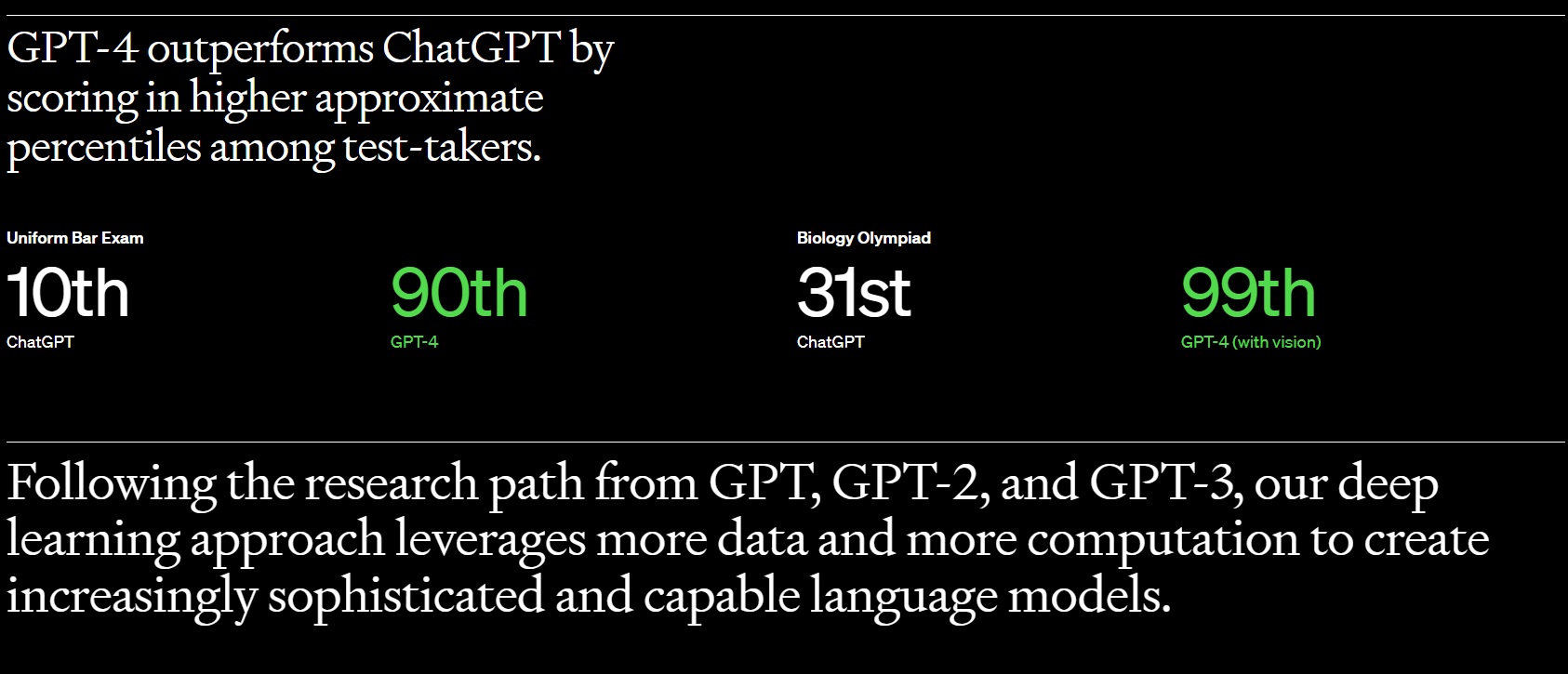
The GPT-4 model has several significant differences from its previous versions. The most notable differences are its improved performance, multimodal inputs and outputs, and increased parameter size.
The GPT-4 has exhibited human-level performance on various professional and academic benchmarks, making it a significant advancement in the field of Artificial Intelligence [1]. It can accept both image and text inputs and emit text outputs, making it a multimodal model.
The parameter size of the GPT-4 has increased significantly compared to its previous versions, which allows it to handle more complex tasks and generate more human-like text.
Impact of the Differences
The improved performance, multimodal inputs and outputs, and increased parameter size of the GPT-4 model have significant advantages. It can improve the efficiency and accuracy of writing, translation, and virtual assistance [2]. However, the potential limitations of the model cannot be ignored, such as the risk of it being used for unethical purposes.
Conclusion
The Open AI GPT-4 is a significant advancement in the field of Artificial Intelligence, with significant differences from its previous versions. Understanding the differences is essential in comprehending the improvements and potential limitations of the model.
FAQs
What are GPT models?
The GPT models are a series of language models that have been developed by Open AI.
What are the differences between GPT-4 and previous versions?
The most notable differences are its improved performance, multimodal inputs and outputs, and increased parameter size.
What are the advantages of the new features of GPT-4?
The improved performance, multimodal inputs and outputs, and increased parameter size of the GPT-4 model can improve the efficiency and accuracy of writing, translation, and virtual assistance.
What are the potential limitations of GPT-4?
The potential limitations of the GPT-4 model include the risk of it being used for unethical purposes.
Introducing GPT-4
https://www.youtube.com/watch?v=TxkJMX0KyS0


