Introduction
As the field of artificial intelligence continues to evolve, natural language processing (NLP) systems such as the Generative Pre-trained Transformer 4 (GPT-4) are being developed to create more advanced language models that can perform a wide range of tasks. However, like all technologies, GPT-4 has its limitations and drawbacks that must be considered. This article aims to explore the disadvantages and limitations of GPT-4.
What is GPT-4?
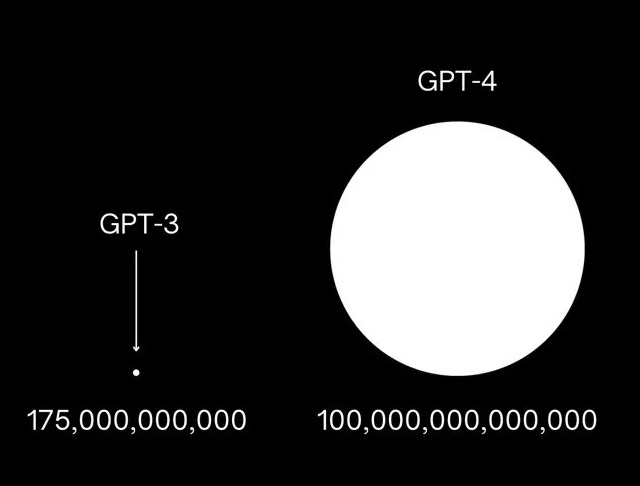
Before delving into its limitations, let us first understand what GPT-4 is. GPT-4 is a state-of-the-art language model developed by OpenAI, which is expected to have more than 10 times the number of parameters as its predecessor, GPT-3. It is designed to perform a variety of natural language processing tasks, including language translation, text summarization, question-answering, and more.
Limitations of GPT-4
Despite its impressive capabilities, GPT-4 still has several limitations that need to be addressed. Here are some of them:
Advantages of gpt-4 over gpt-3
GPT-4 is a new language model being developed by Open AI, which is expected to perform natural language processing (NLP) tasks with more than 10x more parameters and data than GPT-3. However, like GPT-3, GPT-4 has limitations and drawbacks. In this article, we will look at the advantages that GPT-4 has over GPT-3.
It is difficult to compare GPT-4 and GPT-3 with published data, but according to Adam Enfroy, GPT-3 is composed of a relatively small and simple architecture compared to GPT-4, so it can be used for interactive conversations and sentiment analysis. For the same small task, GPT-3 is more efficient than GPT-4 [1].
On the other hand, according to Technology Review, Open AI claims that GPT-4 is 82% less likely to respond to a request for content than GPT-3.5, and 60% less likely to create false information
Additionally, GPT-4 is expected to use much more advanced techniques with more parameters and data than GPT-3 in mimicking human language [3].
Thus, GPT-4 appears to have more advanced natural language processing capabilities than GPT-3, although it is more complex and requires more data and resources. However, it should be noted that these results have not yet been confirmed to some extent as actual data or test results have not been released.
Data Bias
One of the biggest concerns with GPT-4 is data bias. Like its predecessor, GPT-3, GPT-4 is trained on massive amounts of data from the internet. This means that the data it is trained on is inherently biased toward certain perspectives, cultures, and communities. As a result, GPT-4 may have difficulty producing unbiased and fair responses to certain queries, especially those that require a nuanced understanding of diverse cultures and viewpoints.
Interpretability
Another limitation of GPT-4 is its interpretability. Due to the complexity of its architecture and the massive amount of data it is trained on, it can be difficult to understand how the model generates its outputs. This makes it challenging to debug and diagnose errors in the model, which can be a problem when the system produces incorrect or biased responses.
Resource Intensive
GPT-4 is a highly resource-intensive system that requires massive amounts of computing power and data storage to train and run effectively. This means that only organizations with large budgets and access to specialized hardware will be able to use it, which could limit its accessibility to smaller companies and researchers.
Contextual Understanding
While GPT-4 is designed to be contextually aware, it may still struggle to understand the subtle nuances and complexities of human language. For example, it may have difficulty understanding sarcasm, humor, or idiomatic expressions, which could lead to inappropriate or inaccurate responses.
Ethical Concerns
Finally, GPT-4 raises ethical concerns around the use of AI and NLP technologies. There are concerns about the potential misuse of the technology, such as using it to create fake news, propaganda, or biased content. Additionally, there are concerns about the impact of AI on employment and privacy, as more jobs become automated and more data is collected and analyzed.
Conclusion
While GPT-4 is an impressive achievement in the field of natural language processing, it is not without its limitations and drawbacks. As researchers and developers continue to push the boundaries of AI and NLP, it is important to carefully consider the ethical, social, and technical implications of these technologies.
FAQs
1. Can GPT-4 be biased?
Yes, like all language models, GPT-4 can be biased, especially towards the data it is trained on. Developers must take care to ensure that the model is trained on diverse and representative data to avoid bias.
2. How can the interpretability of GPT-4 be improved?
Researchers are exploring various techniques to improve the interpretability of AI models, such as using explainable AI (XAI) techniques,
References
[1] Enfroy, A. (2021). GPT-4 Vs. GPT-3: Key Differences and Advancements. https://www.adamenfroy.com/gpt-4-vs-gpt-3
[2] Technology Review (2023). GPT-4 is bigger and better than ChatGPT, say Open. https://www.technologyreview.com/2023/03/14/1069823/gpt-4-is-bigger-and-better-chatgpt-openai/


